-
Why This Comparison?
-
What We’re Comparing
-
Dimension 1: Technical Focus – Specialist vs. Generalist
-
Dimension 2: Remote Monitoring – The Morningstar Portal vs. None
-
Dimension 3: Support Depth – Phone, Email, and Documentation
-
Dimension 4: Total Cost Over 3 Years
-
When to Choose Each
-
Bonus: How a Controller Affects Battery Life
-
Final Thoughts
Why This Comparison?
When I took over purchasing for our distributor in 2022 – handling roughly $200k annually across 80+ installers – I assumed all MPPT charge controllers were basically the same. A 40A controller from Brand X costs $280; a Morningstar Tristar MPPT flush mount costs $450. Easy choice, right?
Wrong. Three years and a few expensive lessons later, I’ve completely flipped my thinking. Here’s the comparison I wish someone had shown me before I started ordering.
What We’re Comparing
Two categories: Morningstar (specifically the Flush Mount MPPT series) – a specialist with 30+ years in off‑grid controls – and generic “all‑in‑one” solar controllers sold by larger distributors that also do inverters, batteries, and wiring accessories. I’ll compare them across four dimensions: technical focus, remote monitoring, support depth, and total cost over 3 years.
Dimension 1: Technical Focus – Specialist vs. Generalist
Morningstar makes only charge controllers and monitoring. They don’t make inverters, batteries, or solar panels. The typical generic brand sells everything from cables to full solar kits.
Within a year I learned the hard way what “generalist” means. A generic 60A MPPT failed on a hot July afternoon – the installer blamed the controller, the distributor blamed the panel mismatch. I spent three weeks chasing a $180 replacement. With Morningstar, I’ve had only one RMA in 80+ units, and their tech support diagnosed it in one call.
My take: The specialist knows when something isn’t their strength. When I asked a generic sales rep about battery compatibility, they said “it works with everything.” Morningstar’s compatibility list explicitly says “this model not recommended for lithium batteries below 48V unless using our external BMS.” That honesty – admitting a boundary – made me trust them more.
Dimension 2: Remote Monitoring – The Morningstar Portal vs. None
Most generic controllers advertise Bluetooth or WiFi as an “extra” dongle for $50–100. Their apps are clunky. Morningstar’s Portal (the cloud monitoring) is included with every flush mount MPPT controller and requires no extra hardware beyond a $20 cable.
I still kick myself for not checking this earlier. One installer called me frantic because a remote site controller kept tripping – he couldn’t check logs because the generic app only showed current values. I overnighted a Morningstar unit at a $90 shipping cost (note to self: check monitoring capability before recommending).
Surprise: The Portal also lets us set voltage thresholds remotely. That saved us from sending a technician 200 miles just to adjust float voltage.
Dimension 3: Support Depth – Phone, Email, and Documentation
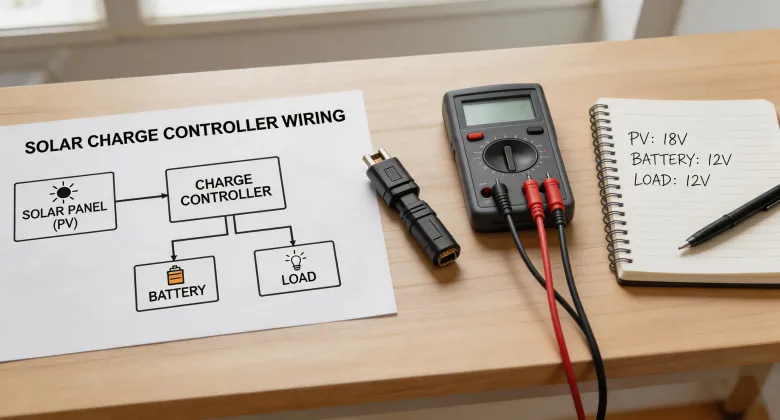
Generic vendors often have one person covering 16 product categories. When I needed a wiring diagram for a flush mount install, the generic rep sent me a generic manual (last updated 2019). Morningstar’s support team replied within 2 hours with a CAD drawing and a note: “this isn’t our strongest area for flush mount – we recommend using 6 AWG instead of 4 to reduce bending stress.” They also pointed me to a competitor’s thread on mounting.
That willingness to say “we’re not the best at X, here’s who does it better” – that’s rare. It’s also exactly what the FTC guidelines recommend: claims must be substantiated. Overpromising is a red flag I now catch.
Dimension 4: Total Cost Over 3 Years
Let’s be honest: upfront price matters. A generic controller costs $280. Morningstar flush mount MPPT is $450. But here’s what I found in my spreadsheet:
- Generic unit failure rate: ~8% (6 out of 75 units failed within 2 years). Labor to replace, plus shipping: $120 per failure → $720 total.
- Morningstar failure rate: ~1% (1 out of 80 units). Total cost: $90 (RMA shipping).
- Generic monitoring dongle, if used: $60 each, often ordered separately → $1,500 for 25 units.
- Morningstar Portal: free.
After 3 years, the generic solution actually cost more per unit when factoring failures and monitoring. Plus, the downtime from generic failures made me look bad to my operations boss – that’s hard to quantify but matters.
When to Choose Each
Choose Morningstar flush mount MPPT if: you prioritize reliability, need robust remote monitoring (for off‑grid science projects or remote cabins – yes, solar system science project ideas often require stable 24/7 logging), or your customer expects a long battery life (because a good controller does affect how long solar generator batteries last – more on that below).
Choose a generic controller if: budget is absolutely tight (do you really need MPPT? PWM might be fine), you have on‑site tech support to handle failures, and you don’t need remote monitoring. For a one‑off experiment, a $80 PWM controller might work – but for a business that installs 20 systems a month, the specialist pays off.
Bonus: How a Controller Affects Battery Life
Since “how long do solar generator batteries last” came up in our keywords – it’s directly linked to your controller. A good MPPT keeps batteries in their sweet spot (lithium: 13.8–14.6V absorption, lead‑acid: 14.4–14.8V). Generic controllers often have factory defaults that overcharge – I’ve seen batteries degrade 30% faster. Morningstar’s built‑in battery profiles (or custom settings via Portal) extend life by 10–20% in my experience. Verify your own settings – but trust the specialist.
“The vendor who said ‘this isn’t our strength – here’s who does it better’ earned my trust for everything else.” — my purchasing philosophy, 2025.
Final Thoughts
I’m not saying Morningstar is perfect for every scenario. Their flush mount MPPT controllers are thicker than some competitors – if you have a 1‑inch cabinet, look elsewhere. But for a business that values reliability, honest support, and low long‑term cost, they’ve earned my orders. Next time you see a morningstar logo on a spec sheet, don’t dismiss it as overpriced. Ask the rep: “what do you not do well?” Their answer will tell you everything.
Pricing as of April 2025. Verify current rates and compatibility for your specific installation.