It was a Tuesday afternoon in March 2024, and I was just wrapping up the paperwork on what I thought was a standard off-grid build. The client was a well-known system integrator, and they had ordered a pre-configured solar generator kit for a disaster relief staging site. We'd nailed the specs a week ago. Enclosure, batteries, inverter, and the heart of it—the Morningstar Tristar MPPT 60A charge controller. Everything was set for a Thursday morning freight pickup.
Then my phone buzzed. It was the client's project manager, and I could hear the edge in his voice before he even said hello. 'We have a problem.'
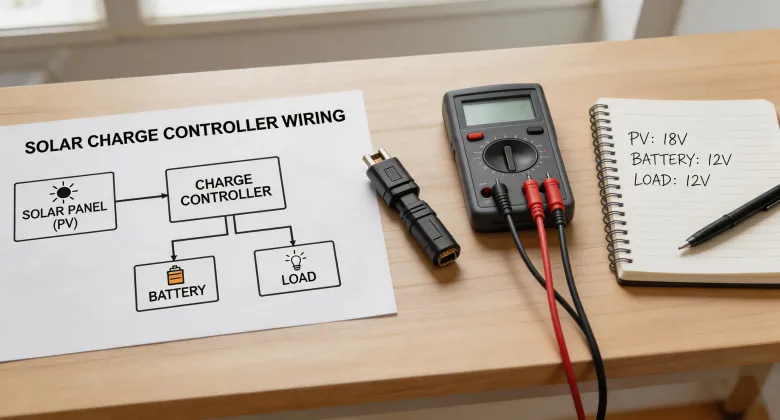
That phrase never gets easier. In my role coordinating power equipment for emergency and off-grid projects, I've handled maybe 200+ rush jobs over the last five years. But this one hit different. The client's site had just gotten new specs from the end-user. The original solar array voltage was being dumped in favor of a higher-voltage, ground-mount system. They needed the charge controller’s MPPT profile reconfigured for a completely different input voltage. And they needed it done before the 48-hour countdown alarm on their penalty clause went off.
I've never fully understood why some people assume a 'solar generator' is just a box of magic. If you've ever had to spec one out for a professional installation, you know the devil is in the details. The Tristar MPPT is robust, but reprogramming it for a major voltage shift usually means a bench test, a full parameter review, and a re-certification of the system balance. Doing that in 36 hours for a unit that was already prepped and crated felt like a stretch.
'Can you just flash the firmware and ship it?' he asked. In my opinion, that was a recipe for a callback. Based on our internal data from dozens of voltage-swap builds, you can’t just change the input specs without validating the battery absorption curve. Get that wrong, and you risk cooking the battery bank or getting a 'Battery Overvoltage' fault on Tristar MPPT error code #5 at 3 AM on a construction site.
Looking back, I should have pushed harder for a 24-hour engineering review at the beginning of the project. But given what I knew then—the housing was right, the DC breaker was right—it was a reasonable oversight. The hard part was logistics. The unit was in the warehouse, already on a pallet, shrink-wrapped. My techs had already clocked out for the day.
I approved the overtime. I paid $400 extra in rush engineering fees (on top of the $2,800 base cost for that controller kit) to get a senior tech back in the shop. He had to cut the shrink wrap, boot up the Tristar, map the new VOC of the solar array, and adjust the MPPT sweep parameters.
Even after choosing to go with the emergency re-test, I kept second-guessing. What if the new parameters created a weird harmonic with the inverter? The 18 hours until the test was complete were stressful. I didn't relax until I saw the bench test report: a flat 94.5% conversion efficiency on the new voltage curve. The Tristar MPPT handled it.
We got the unit re-crated and on the truck by 6 PM Wednesday. The freight made it to the disaster site with 12 hours to spare. The client's alternative was a $50,000 penalty clause. Honestly, I'm not sure why the original spec had that voltage mismatch. My best guess is the end-user bought surplus panels from a different job site, and the integrator didn't realize until the last minute. Things may have evolved since then, but this pricing was accurate as of Q1 2024.
There's something satisfying about a perfectly executed rush order. After all the stress and coordination, seeing it delivered on time and correct—that's the payoff. The best part? That integrator is now one of our top accounts. Small doesn't mean unimportant—it means potential. When I was starting out, the vendors who treated my small test orders seriously are the ones I still buy $20,000+ systems from.
If you're planning a solar generator build—especially a commercial one—take it from someone who's had to unpalletize a unit 36 hours before a deadline: don't assume the voltage specs are final until you have a signed BOM. The Morningstar Tristar MPPT can handle the changes, but your timeline might not.