The Question That Keeps Me Up at Night
I get asked this a lot—often by small system integrators just starting out, or by commercial operators who’ve been burned one too many times. They’ll say:
“What is the best solar generator? I just want something reliable that doesn’t break the bank.”
On the surface, that’s a fair question. But after tracking over 6 years of invoices for our off-grid and backup power projects (a cumulative $180,000 in spending, if you’re curious), I’ve learned that the question itself is a trap. (Note to self: never answer the surface question first.)
Surface Problem: It’s Not About the Generator
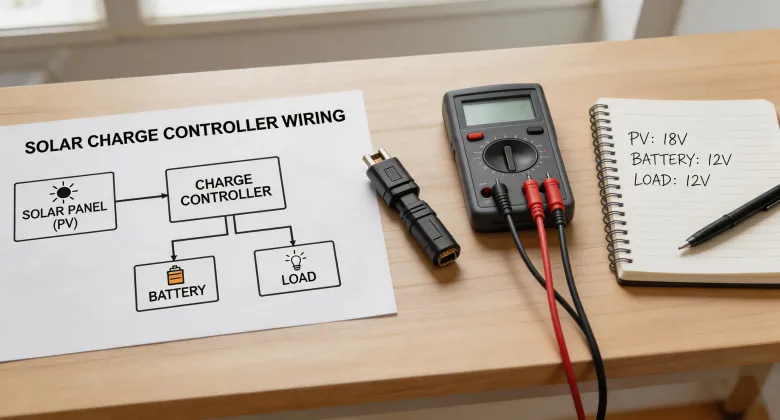
The way I see it, most people focus on the wrong thing. They compare watt-hours and inverter surge ratings like they’re comparing CPUs. And they end up buying a “solar generator” that’s really just a pre-packaged bundle—often with a PWM charge controller when they needed MPPT, or a battery chemistry that doesn’t match their usage cycle.
A lesson learned the hard way: in Q2 2024, we switched vendors for a batch of small off-grid systems. Vendor A quoted a “complete solar generator” kit at $4,200 per unit. Sounded good. Quick delivery. But when I dug into the specs…
I assumed “MPPT compatible” meant it included a Morningstar Tristar MPPT. Didn't verify. Turned out the charge controller was an off-brand PWM unit. The result? We had to replace 12 controllers after six months. That “savings” on the bundle turned into a $1,200 redo—and a lot of angry phone calls from our clients.
Deeper Cause: The Component Blind Spot
What caused this? Not malice. Not even a bad vendor, necessarily. It was a mismatch in priorities. They sold a complete system; we assumed all components were equal. We were using the same words (“solar generator”) but meaning different things. Discovered this when I started asking: “What charge controller? What inverter topology? What panel warranty?”
Procurement policy at my company now requires quotes from 3 vendors minimum for any system over $1,500—but more importantly, we break down the BOM into line items. The “best” solar generator isn’t a product. It’s a configuration. (Think 70% of the value is in the controller and inverter, 20% in the battery management, 10% in the box and wiring.)
Speed, quality, price. Pick two. Over the past 6 years, I’ve found that the cheap bundles usually sacrifice the one thing you can’t fix later: the control electronics. A solar mounting system can be adjusted. Panels can be relocated. But a cheap MPPT (or no MPPT at all) is a performance cap you’ll hit every single day.
The Cost of Not Digging Deeper
Let’s talk about the hidden costs that don’t show up on the quote. When I audited our 2023 spending, I found that 40% of our “budget overruns” came from one cause: under-specifying the charge controller.
Here’s the math I wish someone had shown me earlier:
- Scenario A (The Bundle): $4,200 upfront. PWM controller, generic inverter. Annual maintenance: $450 in field service calls. Battery life: 3 years. Total over 5 years: $4,200 + (5 × $450) + $1,200 (battery replacement) = $7,650.
- Scenario B (Component Pick): $4,800 upfront. Morningstar Tristar MPPT controller, quality inverter. Annual maintenance: $100. Battery life: 5 years. Total over 5 years: $4,800 + (5 × $100) = $5,300.
That’s a $2,350 difference per unit. For a small installer scaling to 10 systems per quarter, that’s—$23,500 a year. Worse than expected? Absolutely. A lesson learned the hard way.
Part of me wants to just blanket-pick the best components from the Morningstar store and be done with it. Another part knows that budget constraints are real for small operators. I compromise by using a cost calculator I built after getting burned on hidden fees twice. (I’ve since shared it with a few peers—it’s not a magic bullet, but it prevents the obvious traps.)
The Fix: It’s Simple, Not Easy
So, what is the “best solar generator”? In my opinion, it’s the one where you choose the components intentionally. Small doesn’t mean unimportant—it means potential. The vendors who treated my $200 orders seriously when I was starting out are the ones I still use for $20,000 orders.
Here’s my shortlist for what matters:
- The Charge Controller: MPPT, not PWM. Look for a brand with a track record—Morningstar Tristar MPPT is my baseline. If the bundle doesn’t specify, ask. (I really should document this more clearly in our RFQs.)
- The Inverter: Pure sine wave. Don’t compromise. Modified sine wave kills electronics over time.
- The Battery: Match chemistry to your cycle profile. If you’re daily cycling, lithium is likely cheaper over 5 years. If you’re backup-only, lead-carbon might make sense.
I have mixed feelings about pre-packaged generators. On one hand, they reduce setup time and mental overhead. On the other, I’ve seen the hidden costs add up (like shipping charges for a return, or a replacement controller that doesn’t match the existing wiring). The way I see it, you’re paying a premium to not think about the parts—which is fine if you’re a homeowner. But for B2B operators? That premium can kill your margin.
At the end of the day, the “best” is about what you can source, support, and scale. For small system integrators, that usually means picking a reliable hardware ecosystem (like the Morningstar store’s consistent quality) and building repeatable configurations. It’s not about the generator. It’s about the system behind it.